Hearing Hope After Cancer: How Expert Care Helped Restore Charlotte’s World of Sound
Dec 8, 2025
Charlotte’s journey began with subtle changes to her hearing after undergoing chemotherapy treatment.
“First, there was ringing in my ears. Then I realized I couldn’t hear in crowds,” she says.
At first, these symptoms might seem minor compared to the overwhelming challenges of cancer treatment, but they quickly evolved into a bigger concern.
Many patients overlook these signs while focusing on recovery, not realizing that certain treatments can lead to changes in hearing.
It is known that specific chemotherapy drugs and radiation, especially when targeted near the head or neck, can cause ototoxicity: a condition where the inner ear’s ability to receive or process sound is damaged.
It’s important to be aware that if you or someone you love has undergone similar treatments, these subtle signs, such as ringing in the ears or difficulty hearing in group situations, could be indicators of hearing loss.
Recognizing these symptoms early, like Charlotte did, is the first step toward a better quality of life and taking action during your recovery journey.
Finding Educated Support at Physicians Hearing Care
When Charlotte decided to address her hearing concerns, she turned to our team; initially, her focus was simply on “caring for my investment in hearing aids,” an understandable priority after years of medical challenges.
But what Charlotte discovered was much more than just an investment in a device. Our team is committed to providing personalized, empathetic care every step of the way.
Charlotte shared, “Dr. Davis was so kind and gentle with my care. She’s worked with me on the type of hearing aid I could afford.”
Whether you are worried about the financial aspect of hearing aids or your unfamiliarity with new technology, you benefit from a caring environment where your specific needs are acknowledged and supported.
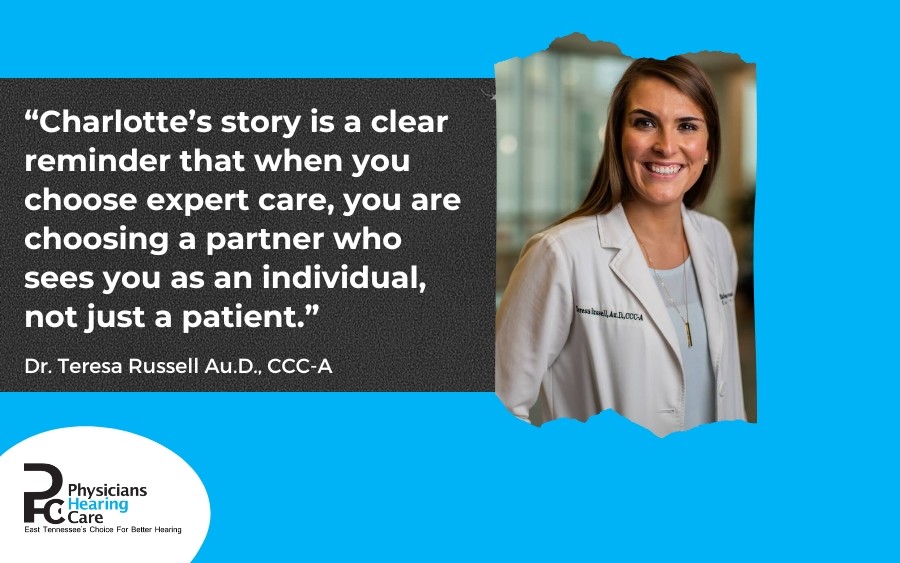
Charlotte’s story is a clear reminder that when you choose expert care, you are choosing a partner who sees you as an individual, not just a patient.
Dr. Davis’s patience and understanding were instrumental in making Charlotte feel comfortable during a challenging time in her life. No question is too small and no worry too trivial when it comes to your hearing health.
With compassionate, individualized care, we work with you to ensure that the hearing solutions we offer not only suit your medical needs but also fit your lifestyle and budget.
Rediscovering the Sounds That Matter Most
The turning point of Charlotte’s experience with hearing care came with a simple yet profound moment: “My greatest gift is being able to hear my granddaughter’s voice. Especially in the car!”
Your hearing is not merely about detecting sounds; it’s about connection, intimacy, and the ability to engage fully with the world around you.
Charlotte’s story illustrates how essential clear hearing is to maintaining relationships and cherishing the moments that enrich your life.
Whether it’s the soothing words of a loved one or the playful banter of a grandchild during a leisurely drive, quality hearing allows you to truly savor these experiences.
A Message of Gratitude and Encouragement
“Dr. Davis has been so helpful,” Charlotte enthuses. “She’s moved me through the process seamlessly.”
Charlotte quickly found that finding a healthcare provider who listens and understands is priceless, especially after her triumph over cancer.
Addressing every aspect of your health, including hearing, is a necessary part of your overall well-being.
Experiencing hearing loss after cancer treatment can feel like an additional battle, but you do not have to fight it alone. Charlotte’s journey demonstrates that with the right support, you can regain one of life’s most precious gifts.
If you have experienced persistent ringing, muffled sounds, or difficulty understanding voices in noisy environments after your cancer treatment, it may be time to evaluate your hearing health.
Take Care of Your Holistic Health
Remember, early intervention can make a significant difference. The sooner you address these symptoms, the quicker you can return to enjoying the sounds that matter most in your life, just like Charlotte did.
By prioritizing your hearing health, you’re not only caring for your physical well-being; you’re also preserving the connections that enrich your daily life.
Schedule your hearing evaluation today so that you can continue to experience every cherished moment with clarity and joy. Your journey toward better hearing is just one call away, and we are here to support you every step of the way!
Frequently Asked Questions
1: What are ototoxic medications?
Ototoxic medications are drugs known to have potential side effects that can damage the inner ear. These effects may include hearing loss, tinnitus (ringing in the ears), or balance issues. Common examples include certain chemotherapy agents, high-dose antibiotics, and loop diuretics. You benefit from understanding these risks when reviewing your treatment options with your healthcare provider.
2: How do ototoxic medications affect your hearing health?
These medications can damage the sensory hair cells in your inner ear that are responsible for translating sound into nerve signals. As a result, you might experience a gradual decrease in your ability to hear, difficulty understanding speech in noisy environments, or persistent ringing in the ears. Being informed about these potential side effects helps you monitor any changes in your hearing over time.
3: When do symptoms of ototoxicity usually appear?
Symptoms can develop gradually, sometimes during treatment and other times even after the medication has been discontinued. If you notice gradual hearing changes or persistent ringing, it’s essential to discuss these symptoms with your healthcare provider and a hearing care professional as soon as possible.
4: What should you do if you suspect ototoxic hearing loss?
If you notice any changes in your hearing, such as persistent tinnitus or difficulty following conversations, it’s important to schedule a consultation with a hearing care professional immediately, as we can assess your hearing, provide recommendations for management, and help mitigate further damage.
5: How can integrated care make a difference in your overall recovery?
Addressing hearing health as part of your overall recovery plan contributes to your well-being in every aspect – emotional, cognitive, and social. By working closely with both your primary healthcare team and specialized hearing care professionals, you can ensure that any changes in your auditory health are managed effectively.
Search
Request a Callback
Hearing Hope After Cancer: How Expert Care Helped Restore Charlotte’s World of Sound
Dec 8, 2025
Charlotte’s journey began with subtle changes to her hearing after undergoing chemotherapy treatment.
“First, there was ringing in my ears. Then I realized I couldn’t hear in crowds,” she says.
At first, these symptoms might seem minor compared to the overwhelming challenges of cancer treatment, but they quickly evolved into a bigger concern.
Many patients overlook these signs while focusing on recovery, not realizing that certain treatments can lead to changes in hearing.
It is known that specific chemotherapy drugs and radiation, especially when targeted near the head or neck, can cause ototoxicity: a condition where the inner ear’s ability to receive or process sound is damaged.
It’s important to be aware that if you or someone you love has undergone similar treatments, these subtle signs, such as ringing in the ears or difficulty hearing in group situations, could be indicators of hearing loss.
Recognizing these symptoms early, like Charlotte did, is the first step toward a better quality of life and taking action during your recovery journey.
Finding Educated Support at Physicians Hearing Care
When Charlotte decided to address her hearing concerns, she turned to our team; initially, her focus was simply on “caring for my investment in hearing aids,” an understandable priority after years of medical challenges.
But what Charlotte discovered was much more than just an investment in a device. Our team is committed to providing personalized, empathetic care every step of the way.
Charlotte shared, “Dr. Davis was so kind and gentle with my care. She’s worked with me on the type of hearing aid I could afford.”
Whether you are worried about the financial aspect of hearing aids or your unfamiliarity with new technology, you benefit from a caring environment where your specific needs are acknowledged and supported.
Charlotte’s story is a clear reminder that when you choose expert care, you are choosing a partner who sees you as an individual, not just a patient.
Dr. Davis’s patience and understanding were instrumental in making Charlotte feel comfortable during a challenging time in her life. No question is too small and no worry too trivial when it comes to your hearing health.
With compassionate, individualized care, we work with you to ensure that the hearing solutions we offer not only suit your medical needs but also fit your lifestyle and budget.
Rediscovering the Sounds That Matter Most
The turning point of Charlotte’s experience with hearing care came with a simple yet profound moment: “My greatest gift is being able to hear my granddaughter’s voice. Especially in the car!”
Your hearing is not merely about detecting sounds; it’s about connection, intimacy, and the ability to engage fully with the world around you.
Charlotte’s story illustrates how essential clear hearing is to maintaining relationships and cherishing the moments that enrich your life.
Whether it’s the soothing words of a loved one or the playful banter of a grandchild during a leisurely drive, quality hearing allows you to truly savor these experiences.
A Message of Gratitude and Encouragement
“Dr. Davis has been so helpful,” Charlotte enthuses. “She’s moved me through the process seamlessly.”
Charlotte quickly found that finding a healthcare provider who listens and understands is priceless, especially after her triumph over cancer.
Addressing every aspect of your health, including hearing, is a necessary part of your overall well-being.
Experiencing hearing loss after cancer treatment can feel like an additional battle, but you do not have to fight it alone. Charlotte’s journey demonstrates that with the right support, you can regain one of life’s most precious gifts.
If you have experienced persistent ringing, muffled sounds, or difficulty understanding voices in noisy environments after your cancer treatment, it may be time to evaluate your hearing health.
Take Care of Your Holistic Health
Remember, early intervention can make a significant difference. The sooner you address these symptoms, the quicker you can return to enjoying the sounds that matter most in your life, just like Charlotte did.
By prioritizing your hearing health, you’re not only caring for your physical well-being; you’re also preserving the connections that enrich your daily life.
Schedule your hearing evaluation today so that you can continue to experience every cherished moment with clarity and joy. Your journey toward better hearing is just one call away, and we are here to support you every step of the way!
Frequently Asked Questions
1: What are ototoxic medications?
Ototoxic medications are drugs known to have potential side effects that can damage the inner ear. These effects may include hearing loss, tinnitus (ringing in the ears), or balance issues. Common examples include certain chemotherapy agents, high-dose antibiotics, and loop diuretics. You benefit from understanding these risks when reviewing your treatment options with your healthcare provider.
2: How do ototoxic medications affect your hearing health?
These medications can damage the sensory hair cells in your inner ear that are responsible for translating sound into nerve signals. As a result, you might experience a gradual decrease in your ability to hear, difficulty understanding speech in noisy environments, or persistent ringing in the ears. Being informed about these potential side effects helps you monitor any changes in your hearing over time.
3: When do symptoms of ototoxicity usually appear?
Symptoms can develop gradually, sometimes during treatment and other times even after the medication has been discontinued. If you notice gradual hearing changes or persistent ringing, it’s essential to discuss these symptoms with your healthcare provider and a hearing care professional as soon as possible.
4: What should you do if you suspect ototoxic hearing loss?
If you notice any changes in your hearing, such as persistent tinnitus or difficulty following conversations, it’s important to schedule a consultation with a hearing care professional immediately, as we can assess your hearing, provide recommendations for management, and help mitigate further damage.
5: How can integrated care make a difference in your overall recovery?
Addressing hearing health as part of your overall recovery plan contributes to your well-being in every aspect – emotional, cognitive, and social. By working closely with both your primary healthcare team and specialized hearing care professionals, you can ensure that any changes in your auditory health are managed effectively.
Search
Request a Callback
Hearing Hope After Cancer: How Expert Care Helped Restore Charlotte’s World of Sound
Dec 8, 2025
Charlotte’s journey began with subtle changes to her hearing after undergoing chemotherapy treatment.
“First, there was ringing in my ears. Then I realized I couldn’t hear in crowds,” she says.
At first, these symptoms might seem minor compared to the overwhelming challenges of cancer treatment, but they quickly evolved into a bigger concern.
Many patients overlook these signs while focusing on recovery, not realizing that certain treatments can lead to changes in hearing.
It is known that specific chemotherapy drugs and radiation, especially when targeted near the head or neck, can cause ototoxicity: a condition where the inner ear’s ability to receive or process sound is damaged.
It’s important to be aware that if you or someone you love has undergone similar treatments, these subtle signs, such as ringing in the ears or difficulty hearing in group situations, could be indicators of hearing loss.
Recognizing these symptoms early, like Charlotte did, is the first step toward a better quality of life and taking action during your recovery journey.
Finding Educated Support at Physicians Hearing Care
When Charlotte decided to address her hearing concerns, she turned to our team; initially, her focus was simply on “caring for my investment in hearing aids,” an understandable priority after years of medical challenges.
But what Charlotte discovered was much more than just an investment in a device. Our team is committed to providing personalized, empathetic care every step of the way.
Charlotte shared, “Dr. Davis was so kind and gentle with my care. She’s worked with me on the type of hearing aid I could afford.”
Whether you are worried about the financial aspect of hearing aids or your unfamiliarity with new technology, you benefit from a caring environment where your specific needs are acknowledged and supported.
Charlotte’s story is a clear reminder that when you choose expert care, you are choosing a partner who sees you as an individual, not just a patient.
Dr. Davis’s patience and understanding were instrumental in making Charlotte feel comfortable during a challenging time in her life. No question is too small and no worry too trivial when it comes to your hearing health.
With compassionate, individualized care, we work with you to ensure that the hearing solutions we offer not only suit your medical needs but also fit your lifestyle and budget.
Rediscovering the Sounds That Matter Most
The turning point of Charlotte’s experience with hearing care came with a simple yet profound moment: “My greatest gift is being able to hear my granddaughter’s voice. Especially in the car!”
Your hearing is not merely about detecting sounds; it’s about connection, intimacy, and the ability to engage fully with the world around you.
Charlotte’s story illustrates how essential clear hearing is to maintaining relationships and cherishing the moments that enrich your life.
Whether it’s the soothing words of a loved one or the playful banter of a grandchild during a leisurely drive, quality hearing allows you to truly savor these experiences.
A Message of Gratitude and Encouragement
“Dr. Davis has been so helpful,” Charlotte enthuses. “She’s moved me through the process seamlessly.”
Charlotte quickly found that finding a healthcare provider who listens and understands is priceless, especially after her triumph over cancer.
Addressing every aspect of your health, including hearing, is a necessary part of your overall well-being.
Experiencing hearing loss after cancer treatment can feel like an additional battle, but you do not have to fight it alone. Charlotte’s journey demonstrates that with the right support, you can regain one of life’s most precious gifts.
If you have experienced persistent ringing, muffled sounds, or difficulty understanding voices in noisy environments after your cancer treatment, it may be time to evaluate your hearing health.
Take Care of Your Holistic Health
Remember, early intervention can make a significant difference. The sooner you address these symptoms, the quicker you can return to enjoying the sounds that matter most in your life, just like Charlotte did.
By prioritizing your hearing health, you’re not only caring for your physical well-being; you’re also preserving the connections that enrich your daily life.
Schedule your hearing evaluation today so that you can continue to experience every cherished moment with clarity and joy. Your journey toward better hearing is just one call away, and we are here to support you every step of the way!
Frequently Asked Questions
1: What are ototoxic medications?
Ototoxic medications are drugs known to have potential side effects that can damage the inner ear. These effects may include hearing loss, tinnitus (ringing in the ears), or balance issues. Common examples include certain chemotherapy agents, high-dose antibiotics, and loop diuretics. You benefit from understanding these risks when reviewing your treatment options with your healthcare provider.
2: How do ototoxic medications affect your hearing health?
These medications can damage the sensory hair cells in your inner ear that are responsible for translating sound into nerve signals. As a result, you might experience a gradual decrease in your ability to hear, difficulty understanding speech in noisy environments, or persistent ringing in the ears. Being informed about these potential side effects helps you monitor any changes in your hearing over time.
3: When do symptoms of ototoxicity usually appear?
Symptoms can develop gradually, sometimes during treatment and other times even after the medication has been discontinued. If you notice gradual hearing changes or persistent ringing, it’s essential to discuss these symptoms with your healthcare provider and a hearing care professional as soon as possible.
4: What should you do if you suspect ototoxic hearing loss?
If you notice any changes in your hearing, such as persistent tinnitus or difficulty following conversations, it’s important to schedule a consultation with a hearing care professional immediately, as we can assess your hearing, provide recommendations for management, and help mitigate further damage.
5: How can integrated care make a difference in your overall recovery?
Addressing hearing health as part of your overall recovery plan contributes to your well-being in every aspect – emotional, cognitive, and social. By working closely with both your primary healthcare team and specialized hearing care professionals, you can ensure that any changes in your auditory health are managed effectively.
Search