What Does Hearing Loss Sound Like?
Mar 6, 2026
There is no single way that hearing loss sounds because no two ears process information in the exact same way. You might find that you can hear the low rumble of a truck passing by quite clearly, yet the voice of a grandchild seems to vanish into the background.
This inconsistency often leads to a sense of confusion, but you can rest assured that these varying experiences are both common and valid. Physicians Hearing Care recognizes that your auditory journey is unique, and we are here to help you navigate these changes with clarity.
The way you perceive sound depends heavily on the specific type and degree of your impairment. Some individuals struggle primarily with the volume of sounds, while others find that the clarity of speech is the primary hurdle.
Because your hearing needs are unique, a specialized approach is required to determine exactly which frequencies or environments are causing you the most difficulty. You benefit from a professional evaluation that looks beyond the surface to understand your specific auditory profile.
Understanding your hearing health starts with a proper assessment, ensuring that the solutions provided are tailored specifically to your lifestyle.
Different Types of Hearing Loss, Different Experiences
Hearing loss is categorized based on which part of the ear is affected, and each category creates a distinct listening experience. Sensory or inner ear-related loss is the most common form.
In this scenario, the delicate hair cells in the cochlea are damaged, which often impacts the clarity of sounds rather than just the loudness. You might feel as though people are mumbling or that you can hear the sound of a voice but cannot distinguish the specific words being said.
Conductive hearing loss occurs when sound cannot travel efficiently through the outer or middle ear. This might feel like you are wearing earplugs or listening to the world from underwater.
Additionally, some individuals experience mixed hearing loss, which is a combination of both sensory and conductive issues. One-sided hearing loss presents its own set of challenges, particularly when you are trying to locate where a sound is coming from in a room.
Each of these types changes how speech and environmental sounds are perceived, making it vital to meet with the experts who can identify the root cause of your symptoms.
Levels of Hearing Loss and How They Change What You Hear
The severity of hearing loss is measured in levels, ranging from mild to profound. If you have mild hearing loss, you might only notice difficulties with soft sounds, such as birds chirping or the hum of a distant air conditioner.
As the loss progresses to a moderate level, you likely find that following a conversation in a noisy restaurant becomes exhausting. You may start to rely on visual cues or lip reading to fill in the gaps of what you are missing.
Severe and profound hearing loss impact daily communication more significantly. At these stages, even loud speech may be difficult to hear without assistance.
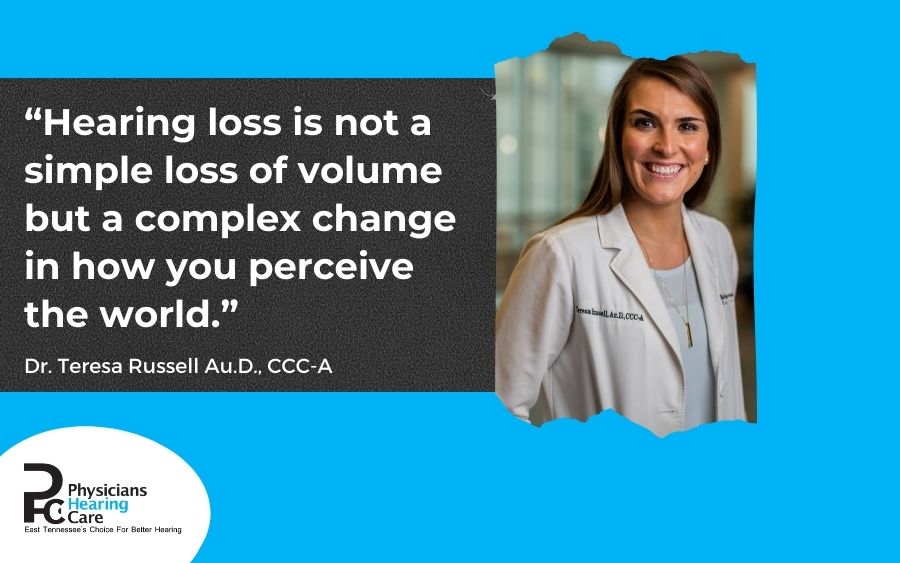
It is important to remember that hearing loss is not a simple loss of volume but a complex change in how you perceive the world. Even a slight dip in hearing can lead to cognitive fatigue as your brain works harder to decode muffled signals.
When you discover our clinical approach, you take a proactive step in managing these changes before they impact your quality of life.
Why Speech Can Sound Muffled or Incomplete
Speech is a complex tapestry of different pitches and frequencies.
Consonants like "s," "f," and "th" are high pitched and provide the definition to words. Vowels are generally lower pitched and provide the volume. Many people lose the ability to hear high frequencies first, which means these defining consonants drop out. When this happens, "cat" might sound like "at," or "show" might sound like "oh."
An audiogram is a visual map that shows exactly what you can and cannot hear across various frequencies. It often reveals a "slope" where your hearing is strong in low pitches but drops off in the higher ranges.
This explains why you might hear the bass in music perfectly but struggle to understand a woman’s or child’s voice. Difficulty understanding speech in complex environments is a hallmark sign of hearing loss, and seeing your results on an audiogram helps clarify why certain situations are more difficult for you than others.
How PHC Helps You Understand Your Hearing Clearly
Physicians Hearing Care is committed to clinical excellence and the highest standards of best practice audiology. You benefit from our dedication to personalized assessments rather than a one-size-fits-all approach.
We believe that you should never leave an appointment with more questions than answers. That is why we emphasize same-day explanation of results, ensuring you leave our office with a clear understanding of your auditory health.
Our team functions as problem solvers who take the time to adjust, explain, and support you through every step of your journey. We utilize modern hearing solutions to ensure that your devices are programmed to meet your specific environmental needs.
This trust has been built through decades of care and consistency within the community. When you partner with Physicians Hearing Care, you are gaining an advocate for your long-term wellness.
Get Answers from a Hearing Care Partner You Can Trust
You do not have to navigate the complexities of hearing loss alone. Whether you are just starting to notice changes or have been struggling for years, gaining clarity is possible.
We invite you to schedule a comprehensive hearing evaluation with our experienced team. These sessions are designed to be educational and supportive, providing you with a pressure-free environment to explore your options.
At Physicians Hearing Care, we promise to put your individual hearing needs first. We treat every patient like a member of our own family, ensuring you receive the attention and expertise you require.
Contact us today to gain a clearer perspective on your hearing health and join a community that values your ability to stay connected to the sounds you love.
Frequently Asked Questions
Why can I hear people talking but I cannot understand the words they are saying?
This is a very common experience often related to high-frequency hearing loss. Speech clarity depends on hearing high-pitched consonant sounds. If you cannot hear those frequencies, the "shape" of the words disappears, leaving you with only the low-pitched vowel sounds. This creates a muffled effect where you hear the noise of the voice, but the meaning remains unclear.
Is it possible for my hearing loss to affect only one ear, and how does that change my experience?
Yes, unilateral hearing loss is quite common and can be caused by various factors, including infections, trauma, or certain medical conditions. When you have one ear that hears better than the other, you lose the ability to "localize" sound, making it difficult to tell where a noise is coming from. It also makes hearing in background noise significantly more challenging because the brain uses input from both ears to filter out unwanted sounds.
Will my hearing get worse if I choose not to use hearing aids right now?
While hearing aids do not "cure" hearing loss or physically stop the ears from aging, they play a critical role in brain health. When the auditory cortex is deprived of sound, it can begin to lose the ability to process speech over time, a process known as auditory deprivation. By using hearing aids, you keep the neural pathways active, which helps preserve your ability to understand speech clearly in the future.
Sources
American Speech-Language-Hearing Association (ASHA) ASHA is a leading national professional organization for audiologists and speech-language pathologists. Their resources provide detailed clinical definitions of the various types of hearing loss and their causes.
Search
Request a Callback
What Does Hearing Loss Sound Like?
Mar 6, 2026
There is no single way that hearing loss sounds because no two ears process information in the exact same way. You might find that you can hear the low rumble of a truck passing by quite clearly, yet the voice of a grandchild seems to vanish into the background.
This inconsistency often leads to a sense of confusion, but you can rest assured that these varying experiences are both common and valid. Physicians Hearing Care recognizes that your auditory journey is unique, and we are here to help you navigate these changes with clarity.
The way you perceive sound depends heavily on the specific type and degree of your impairment. Some individuals struggle primarily with the volume of sounds, while others find that the clarity of speech is the primary hurdle.
Because your hearing needs are unique, a specialized approach is required to determine exactly which frequencies or environments are causing you the most difficulty. You benefit from a professional evaluation that looks beyond the surface to understand your specific auditory profile.
Understanding your hearing health starts with a proper assessment, ensuring that the solutions provided are tailored specifically to your lifestyle.
Different Types of Hearing Loss, Different Experiences
Hearing loss is categorized based on which part of the ear is affected, and each category creates a distinct listening experience. Sensory or inner ear-related loss is the most common form.
In this scenario, the delicate hair cells in the cochlea are damaged, which often impacts the clarity of sounds rather than just the loudness. You might feel as though people are mumbling or that you can hear the sound of a voice but cannot distinguish the specific words being said.
Conductive hearing loss occurs when sound cannot travel efficiently through the outer or middle ear. This might feel like you are wearing earplugs or listening to the world from underwater.
Additionally, some individuals experience mixed hearing loss, which is a combination of both sensory and conductive issues. One-sided hearing loss presents its own set of challenges, particularly when you are trying to locate where a sound is coming from in a room.
Each of these types changes how speech and environmental sounds are perceived, making it vital to meet with the experts who can identify the root cause of your symptoms.
Levels of Hearing Loss and How They Change What You Hear
The severity of hearing loss is measured in levels, ranging from mild to profound. If you have mild hearing loss, you might only notice difficulties with soft sounds, such as birds chirping or the hum of a distant air conditioner.
As the loss progresses to a moderate level, you likely find that following a conversation in a noisy restaurant becomes exhausting. You may start to rely on visual cues or lip reading to fill in the gaps of what you are missing.
Severe and profound hearing loss impact daily communication more significantly. At these stages, even loud speech may be difficult to hear without assistance.
It is important to remember that hearing loss is not a simple loss of volume but a complex change in how you perceive the world. Even a slight dip in hearing can lead to cognitive fatigue as your brain works harder to decode muffled signals.
When you discover our clinical approach, you take a proactive step in managing these changes before they impact your quality of life.
Why Speech Can Sound Muffled or Incomplete
Speech is a complex tapestry of different pitches and frequencies.
Consonants like "s," "f," and "th" are high pitched and provide the definition to words. Vowels are generally lower pitched and provide the volume. Many people lose the ability to hear high frequencies first, which means these defining consonants drop out. When this happens, "cat" might sound like "at," or "show" might sound like "oh."
An audiogram is a visual map that shows exactly what you can and cannot hear across various frequencies. It often reveals a "slope" where your hearing is strong in low pitches but drops off in the higher ranges.
This explains why you might hear the bass in music perfectly but struggle to understand a woman’s or child’s voice. Difficulty understanding speech in complex environments is a hallmark sign of hearing loss, and seeing your results on an audiogram helps clarify why certain situations are more difficult for you than others.
How PHC Helps You Understand Your Hearing Clearly
Physicians Hearing Care is committed to clinical excellence and the highest standards of best practice audiology. You benefit from our dedication to personalized assessments rather than a one-size-fits-all approach.
We believe that you should never leave an appointment with more questions than answers. That is why we emphasize same-day explanation of results, ensuring you leave our office with a clear understanding of your auditory health.
Our team functions as problem solvers who take the time to adjust, explain, and support you through every step of your journey. We utilize modern hearing solutions to ensure that your devices are programmed to meet your specific environmental needs.
This trust has been built through decades of care and consistency within the community. When you partner with Physicians Hearing Care, you are gaining an advocate for your long-term wellness.
Get Answers from a Hearing Care Partner You Can Trust
You do not have to navigate the complexities of hearing loss alone. Whether you are just starting to notice changes or have been struggling for years, gaining clarity is possible.
We invite you to schedule a comprehensive hearing evaluation with our experienced team. These sessions are designed to be educational and supportive, providing you with a pressure-free environment to explore your options.
At Physicians Hearing Care, we promise to put your individual hearing needs first. We treat every patient like a member of our own family, ensuring you receive the attention and expertise you require.
Contact us today to gain a clearer perspective on your hearing health and join a community that values your ability to stay connected to the sounds you love.
Frequently Asked Questions
Why can I hear people talking but I cannot understand the words they are saying?
This is a very common experience often related to high-frequency hearing loss. Speech clarity depends on hearing high-pitched consonant sounds. If you cannot hear those frequencies, the "shape" of the words disappears, leaving you with only the low-pitched vowel sounds. This creates a muffled effect where you hear the noise of the voice, but the meaning remains unclear.
Is it possible for my hearing loss to affect only one ear, and how does that change my experience?
Yes, unilateral hearing loss is quite common and can be caused by various factors, including infections, trauma, or certain medical conditions. When you have one ear that hears better than the other, you lose the ability to "localize" sound, making it difficult to tell where a noise is coming from. It also makes hearing in background noise significantly more challenging because the brain uses input from both ears to filter out unwanted sounds.
Will my hearing get worse if I choose not to use hearing aids right now?
While hearing aids do not "cure" hearing loss or physically stop the ears from aging, they play a critical role in brain health. When the auditory cortex is deprived of sound, it can begin to lose the ability to process speech over time, a process known as auditory deprivation. By using hearing aids, you keep the neural pathways active, which helps preserve your ability to understand speech clearly in the future.
Sources
American Speech-Language-Hearing Association (ASHA) ASHA is a leading national professional organization for audiologists and speech-language pathologists. Their resources provide detailed clinical definitions of the various types of hearing loss and their causes.
Search
Request a Callback
What Does Hearing Loss Sound Like?
Mar 6, 2026
There is no single way that hearing loss sounds because no two ears process information in the exact same way. You might find that you can hear the low rumble of a truck passing by quite clearly, yet the voice of a grandchild seems to vanish into the background.
This inconsistency often leads to a sense of confusion, but you can rest assured that these varying experiences are both common and valid. Physicians Hearing Care recognizes that your auditory journey is unique, and we are here to help you navigate these changes with clarity.
The way you perceive sound depends heavily on the specific type and degree of your impairment. Some individuals struggle primarily with the volume of sounds, while others find that the clarity of speech is the primary hurdle.
Because your hearing needs are unique, a specialized approach is required to determine exactly which frequencies or environments are causing you the most difficulty. You benefit from a professional evaluation that looks beyond the surface to understand your specific auditory profile.
Understanding your hearing health starts with a proper assessment, ensuring that the solutions provided are tailored specifically to your lifestyle.
Different Types of Hearing Loss, Different Experiences
Hearing loss is categorized based on which part of the ear is affected, and each category creates a distinct listening experience. Sensory or inner ear-related loss is the most common form.
In this scenario, the delicate hair cells in the cochlea are damaged, which often impacts the clarity of sounds rather than just the loudness. You might feel as though people are mumbling or that you can hear the sound of a voice but cannot distinguish the specific words being said.
Conductive hearing loss occurs when sound cannot travel efficiently through the outer or middle ear. This might feel like you are wearing earplugs or listening to the world from underwater.
Additionally, some individuals experience mixed hearing loss, which is a combination of both sensory and conductive issues. One-sided hearing loss presents its own set of challenges, particularly when you are trying to locate where a sound is coming from in a room.
Each of these types changes how speech and environmental sounds are perceived, making it vital to meet with the experts who can identify the root cause of your symptoms.
Levels of Hearing Loss and How They Change What You Hear
The severity of hearing loss is measured in levels, ranging from mild to profound. If you have mild hearing loss, you might only notice difficulties with soft sounds, such as birds chirping or the hum of a distant air conditioner.
As the loss progresses to a moderate level, you likely find that following a conversation in a noisy restaurant becomes exhausting. You may start to rely on visual cues or lip reading to fill in the gaps of what you are missing.
Severe and profound hearing loss impact daily communication more significantly. At these stages, even loud speech may be difficult to hear without assistance.
It is important to remember that hearing loss is not a simple loss of volume but a complex change in how you perceive the world. Even a slight dip in hearing can lead to cognitive fatigue as your brain works harder to decode muffled signals.
When you discover our clinical approach, you take a proactive step in managing these changes before they impact your quality of life.
Why Speech Can Sound Muffled or Incomplete
Speech is a complex tapestry of different pitches and frequencies.
Consonants like "s," "f," and "th" are high pitched and provide the definition to words. Vowels are generally lower pitched and provide the volume. Many people lose the ability to hear high frequencies first, which means these defining consonants drop out. When this happens, "cat" might sound like "at," or "show" might sound like "oh."
An audiogram is a visual map that shows exactly what you can and cannot hear across various frequencies. It often reveals a "slope" where your hearing is strong in low pitches but drops off in the higher ranges.
This explains why you might hear the bass in music perfectly but struggle to understand a woman’s or child’s voice. Difficulty understanding speech in complex environments is a hallmark sign of hearing loss, and seeing your results on an audiogram helps clarify why certain situations are more difficult for you than others.
How PHC Helps You Understand Your Hearing Clearly
Physicians Hearing Care is committed to clinical excellence and the highest standards of best practice audiology. You benefit from our dedication to personalized assessments rather than a one-size-fits-all approach.
We believe that you should never leave an appointment with more questions than answers. That is why we emphasize same-day explanation of results, ensuring you leave our office with a clear understanding of your auditory health.
Our team functions as problem solvers who take the time to adjust, explain, and support you through every step of your journey. We utilize modern hearing solutions to ensure that your devices are programmed to meet your specific environmental needs.
This trust has been built through decades of care and consistency within the community. When you partner with Physicians Hearing Care, you are gaining an advocate for your long-term wellness.
Get Answers from a Hearing Care Partner You Can Trust
You do not have to navigate the complexities of hearing loss alone. Whether you are just starting to notice changes or have been struggling for years, gaining clarity is possible.
We invite you to schedule a comprehensive hearing evaluation with our experienced team. These sessions are designed to be educational and supportive, providing you with a pressure-free environment to explore your options.
At Physicians Hearing Care, we promise to put your individual hearing needs first. We treat every patient like a member of our own family, ensuring you receive the attention and expertise you require.
Contact us today to gain a clearer perspective on your hearing health and join a community that values your ability to stay connected to the sounds you love.
Frequently Asked Questions
Why can I hear people talking but I cannot understand the words they are saying?
This is a very common experience often related to high-frequency hearing loss. Speech clarity depends on hearing high-pitched consonant sounds. If you cannot hear those frequencies, the "shape" of the words disappears, leaving you with only the low-pitched vowel sounds. This creates a muffled effect where you hear the noise of the voice, but the meaning remains unclear.
Is it possible for my hearing loss to affect only one ear, and how does that change my experience?
Yes, unilateral hearing loss is quite common and can be caused by various factors, including infections, trauma, or certain medical conditions. When you have one ear that hears better than the other, you lose the ability to "localize" sound, making it difficult to tell where a noise is coming from. It also makes hearing in background noise significantly more challenging because the brain uses input from both ears to filter out unwanted sounds.
Will my hearing get worse if I choose not to use hearing aids right now?
While hearing aids do not "cure" hearing loss or physically stop the ears from aging, they play a critical role in brain health. When the auditory cortex is deprived of sound, it can begin to lose the ability to process speech over time, a process known as auditory deprivation. By using hearing aids, you keep the neural pathways active, which helps preserve your ability to understand speech clearly in the future.
Sources
American Speech-Language-Hearing Association (ASHA) ASHA is a leading national professional organization for audiologists and speech-language pathologists. Their resources provide detailed clinical definitions of the various types of hearing loss and their causes.
Search