Why the Right Expert Matters: Susan's Success Story at PHC Tennessee
May 29, 2026
Auditory changes frequently develop so slowly that you often adapt without even realizing how much sound you’ve lost.
Susan, now a retired school teacher, first became aware of her hearing loss when she was in her 40s. Working in a vibrant classroom environment requires sharp auditory focus, and she soon noticed a distinct shift in her daily interactions.
Managing a room full of young students quickly reveals when your speech processing is no longer performing at its best. She recalls, “I was having trouble hearing the responses of the children. At that point, I went to have a hearing test.”
Susan had no worries prior to her appointment because her primary goal was clear. She says, “I needed to hear!”
This proactive mindset is incredibly valuable when dealing with changes in your physical health. Instead of letting worry or denial delay her care, Susan focused entirely on the solution.
Taking immediate action allowed her to address her symptoms head-on, ensuring she could continue managing her classroom effectively without missing a single beat.
Why Early Intervention Matters
Understanding the adaptation period is one of the most critical aspects of managing long-term auditory wellness. There are deep physiological and psychological reasons behind adjusting to amplification after experiencing a decline in sound processing. When you delay care, your brain gradually forgets how to process specific environmental frequencies.
The challenge of silence is that the brain adapts to a quieter world over time, making future treatment more complex.
Reflecting on her own experience with hearing loss, Susan shares, “If you think you need hearing aids, the sooner you get them, the more successful you will be. The longer you live in quiet, the harder it is to wear aids because of the additional noise.”
Preventative care frames early testing and intervention as a simple step to protect long-term cognitive and social well-being. If you wait decades to introduce amplification, everyday sounds like wind, footsteps, or crinkling paper can feel overwhelmingly loud.
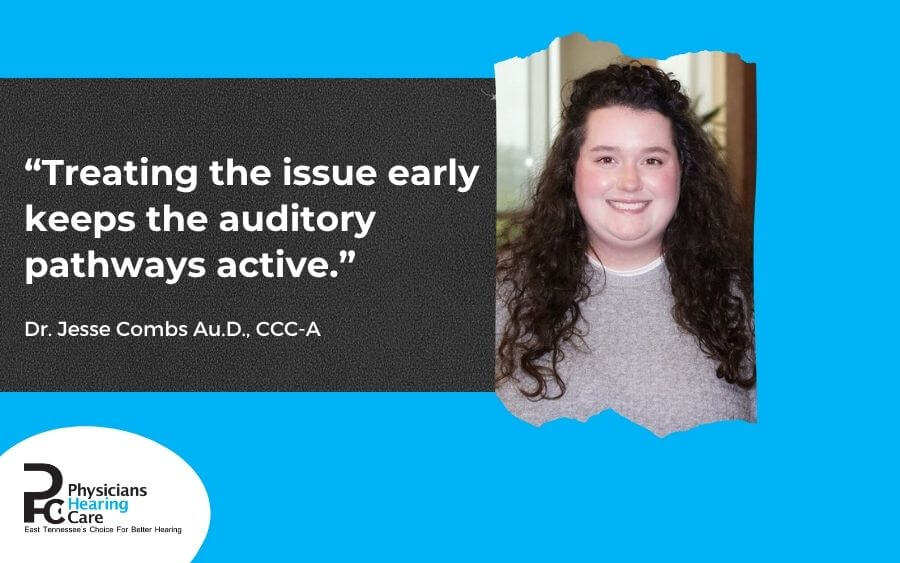
Treating the issue early keeps the auditory pathways active, making the transition to modern technology incredibly smooth and natural.
The Impact on Daily Life
Receiving proper care provides immense professional longevity, allowing individuals to continue working confidently before transitioning into retirement. For Susan, addressing her symptoms in her 40s meant she could preserve her energy levels and stay highly effective throughout her teaching career.
The social benefits of clear communication extend far beyond the workplace, keeping individuals deeply connected to friends, family, and community activities.
Hearing aids have been a positive addition to Susan’s life: “They have helped in many ways, helped to keep me social, continue to work before I retired.”
Empowering your independence focuses on the renewed confidence that comes from hearing the world around you clearly.
When you no longer have to struggle to follow the thread of a fast-paced conversation, social gatherings become an absolute joy rather than a source of fatigue. Clear sound allows you to remain the active, engaged participant you have always been.
The Role of Expertise
Beyond the device itself, the technology is only part of the equation when treating a change in your hearing. A hearing aid is a highly sophisticated digital tool, but its performance depends entirely on the diagnostic skill and customized programming of the person managing your care.
Susan is “very happy” with the care she has received from PHC Tennessee, emphasizing that personalized attention makes all the difference.
She notes, “Your hearing aids are only as good as the person who fits you and does the follow ups.”
A successful outcome requires continuous support, real-world fine-tuning, and long-term follow-up care that online retailers simply cannot replicate. By partnering with our dedicated local experts, your devices are precisely calibrated to your unique anatomy, your prescription, and your lifestyle, ensuring optimal clarity for years to come.
Take charge of your lifestyle today. If you or a loved one is noticing changes in your ability to follow conversations, don't wait for the problem to affect your confidence.
Contact PHC Tennessee to schedule your comprehensive hearing consultation today and receive the same expert, ongoing care that made a lifelong difference in Susan's life.
FAQs
Q: Why does a noisy environment feel overwhelming after waiting too long for treatment?
A: When the brain goes without hearing certain frequencies for years, it loses the ability to filter out background noise naturally. When amplification is finally introduced, the sudden influx of sound can feel intense until the brain relearns how to prioritize speech.
Q: How does untreated hearing loss impact professional longevity?
A: Struggling to hear instructions, missing details in meetings, or misinterpreting student responses causes extreme mental fatigue. Addressing symptoms early removes this constant strain, allowing professionals to work confidently and productively.
Q: What makes follow-up care so important for new devices?
A: Your initial fitting is just the first step. As your brain adapts to hearing new sounds again, your provider will fine-tune the programming based on your real-world experiences to maximize clarity and physical comfort.
Source
Early audiologic intervention, objective real-ear verification programming, and structured clinical follow-up care remain vital for preventing auditory deprivation and maximizing long-term adult speech understanding.
Search
Request a Callback
Why the Right Expert Matters: Susan's Success Story at PHC Tennessee
May 29, 2026
Auditory changes frequently develop so slowly that you often adapt without even realizing how much sound you’ve lost.
Susan, now a retired school teacher, first became aware of her hearing loss when she was in her 40s. Working in a vibrant classroom environment requires sharp auditory focus, and she soon noticed a distinct shift in her daily interactions.
Managing a room full of young students quickly reveals when your speech processing is no longer performing at its best. She recalls, “I was having trouble hearing the responses of the children. At that point, I went to have a hearing test.”
Susan had no worries prior to her appointment because her primary goal was clear. She says, “I needed to hear!”
This proactive mindset is incredibly valuable when dealing with changes in your physical health. Instead of letting worry or denial delay her care, Susan focused entirely on the solution.
Taking immediate action allowed her to address her symptoms head-on, ensuring she could continue managing her classroom effectively without missing a single beat.
Why Early Intervention Matters
Understanding the adaptation period is one of the most critical aspects of managing long-term auditory wellness. There are deep physiological and psychological reasons behind adjusting to amplification after experiencing a decline in sound processing. When you delay care, your brain gradually forgets how to process specific environmental frequencies.
The challenge of silence is that the brain adapts to a quieter world over time, making future treatment more complex.
Reflecting on her own experience with hearing loss, Susan shares, “If you think you need hearing aids, the sooner you get them, the more successful you will be. The longer you live in quiet, the harder it is to wear aids because of the additional noise.”
Preventative care frames early testing and intervention as a simple step to protect long-term cognitive and social well-being. If you wait decades to introduce amplification, everyday sounds like wind, footsteps, or crinkling paper can feel overwhelmingly loud.
Treating the issue early keeps the auditory pathways active, making the transition to modern technology incredibly smooth and natural.
The Impact on Daily Life
Receiving proper care provides immense professional longevity, allowing individuals to continue working confidently before transitioning into retirement. For Susan, addressing her symptoms in her 40s meant she could preserve her energy levels and stay highly effective throughout her teaching career.
The social benefits of clear communication extend far beyond the workplace, keeping individuals deeply connected to friends, family, and community activities.
Hearing aids have been a positive addition to Susan’s life: “They have helped in many ways, helped to keep me social, continue to work before I retired.”
Empowering your independence focuses on the renewed confidence that comes from hearing the world around you clearly.
When you no longer have to struggle to follow the thread of a fast-paced conversation, social gatherings become an absolute joy rather than a source of fatigue. Clear sound allows you to remain the active, engaged participant you have always been.
The Role of Expertise
Beyond the device itself, the technology is only part of the equation when treating a change in your hearing. A hearing aid is a highly sophisticated digital tool, but its performance depends entirely on the diagnostic skill and customized programming of the person managing your care.
Susan is “very happy” with the care she has received from PHC Tennessee, emphasizing that personalized attention makes all the difference.
She notes, “Your hearing aids are only as good as the person who fits you and does the follow ups.”
A successful outcome requires continuous support, real-world fine-tuning, and long-term follow-up care that online retailers simply cannot replicate. By partnering with our dedicated local experts, your devices are precisely calibrated to your unique anatomy, your prescription, and your lifestyle, ensuring optimal clarity for years to come.
Take charge of your lifestyle today. If you or a loved one is noticing changes in your ability to follow conversations, don't wait for the problem to affect your confidence.
Contact PHC Tennessee to schedule your comprehensive hearing consultation today and receive the same expert, ongoing care that made a lifelong difference in Susan's life.
FAQs
Q: Why does a noisy environment feel overwhelming after waiting too long for treatment?
A: When the brain goes without hearing certain frequencies for years, it loses the ability to filter out background noise naturally. When amplification is finally introduced, the sudden influx of sound can feel intense until the brain relearns how to prioritize speech.
Q: How does untreated hearing loss impact professional longevity?
A: Struggling to hear instructions, missing details in meetings, or misinterpreting student responses causes extreme mental fatigue. Addressing symptoms early removes this constant strain, allowing professionals to work confidently and productively.
Q: What makes follow-up care so important for new devices?
A: Your initial fitting is just the first step. As your brain adapts to hearing new sounds again, your provider will fine-tune the programming based on your real-world experiences to maximize clarity and physical comfort.
Source
Early audiologic intervention, objective real-ear verification programming, and structured clinical follow-up care remain vital for preventing auditory deprivation and maximizing long-term adult speech understanding.
Search
Request a Callback
Why the Right Expert Matters: Susan's Success Story at PHC Tennessee
May 29, 2026
Auditory changes frequently develop so slowly that you often adapt without even realizing how much sound you’ve lost.
Susan, now a retired school teacher, first became aware of her hearing loss when she was in her 40s. Working in a vibrant classroom environment requires sharp auditory focus, and she soon noticed a distinct shift in her daily interactions.
Managing a room full of young students quickly reveals when your speech processing is no longer performing at its best. She recalls, “I was having trouble hearing the responses of the children. At that point, I went to have a hearing test.”
Susan had no worries prior to her appointment because her primary goal was clear. She says, “I needed to hear!”
This proactive mindset is incredibly valuable when dealing with changes in your physical health. Instead of letting worry or denial delay her care, Susan focused entirely on the solution.
Taking immediate action allowed her to address her symptoms head-on, ensuring she could continue managing her classroom effectively without missing a single beat.
Why Early Intervention Matters
Understanding the adaptation period is one of the most critical aspects of managing long-term auditory wellness. There are deep physiological and psychological reasons behind adjusting to amplification after experiencing a decline in sound processing. When you delay care, your brain gradually forgets how to process specific environmental frequencies.
The challenge of silence is that the brain adapts to a quieter world over time, making future treatment more complex.
Reflecting on her own experience with hearing loss, Susan shares, “If you think you need hearing aids, the sooner you get them, the more successful you will be. The longer you live in quiet, the harder it is to wear aids because of the additional noise.”
Preventative care frames early testing and intervention as a simple step to protect long-term cognitive and social well-being. If you wait decades to introduce amplification, everyday sounds like wind, footsteps, or crinkling paper can feel overwhelmingly loud.
Treating the issue early keeps the auditory pathways active, making the transition to modern technology incredibly smooth and natural.
The Impact on Daily Life
Receiving proper care provides immense professional longevity, allowing individuals to continue working confidently before transitioning into retirement. For Susan, addressing her symptoms in her 40s meant she could preserve her energy levels and stay highly effective throughout her teaching career.
The social benefits of clear communication extend far beyond the workplace, keeping individuals deeply connected to friends, family, and community activities.
Hearing aids have been a positive addition to Susan’s life: “They have helped in many ways, helped to keep me social, continue to work before I retired.”
Empowering your independence focuses on the renewed confidence that comes from hearing the world around you clearly.
When you no longer have to struggle to follow the thread of a fast-paced conversation, social gatherings become an absolute joy rather than a source of fatigue. Clear sound allows you to remain the active, engaged participant you have always been.
The Role of Expertise
Beyond the device itself, the technology is only part of the equation when treating a change in your hearing. A hearing aid is a highly sophisticated digital tool, but its performance depends entirely on the diagnostic skill and customized programming of the person managing your care.
Susan is “very happy” with the care she has received from PHC Tennessee, emphasizing that personalized attention makes all the difference.
She notes, “Your hearing aids are only as good as the person who fits you and does the follow ups.”
A successful outcome requires continuous support, real-world fine-tuning, and long-term follow-up care that online retailers simply cannot replicate. By partnering with our dedicated local experts, your devices are precisely calibrated to your unique anatomy, your prescription, and your lifestyle, ensuring optimal clarity for years to come.
Take charge of your lifestyle today. If you or a loved one is noticing changes in your ability to follow conversations, don't wait for the problem to affect your confidence.
Contact PHC Tennessee to schedule your comprehensive hearing consultation today and receive the same expert, ongoing care that made a lifelong difference in Susan's life.
FAQs
Q: Why does a noisy environment feel overwhelming after waiting too long for treatment?
A: When the brain goes without hearing certain frequencies for years, it loses the ability to filter out background noise naturally. When amplification is finally introduced, the sudden influx of sound can feel intense until the brain relearns how to prioritize speech.
Q: How does untreated hearing loss impact professional longevity?
A: Struggling to hear instructions, missing details in meetings, or misinterpreting student responses causes extreme mental fatigue. Addressing symptoms early removes this constant strain, allowing professionals to work confidently and productively.
Q: What makes follow-up care so important for new devices?
A: Your initial fitting is just the first step. As your brain adapts to hearing new sounds again, your provider will fine-tune the programming based on your real-world experiences to maximize clarity and physical comfort.
Source
Early audiologic intervention, objective real-ear verification programming, and structured clinical follow-up care remain vital for preventing auditory deprivation and maximizing long-term adult speech understanding.
Search